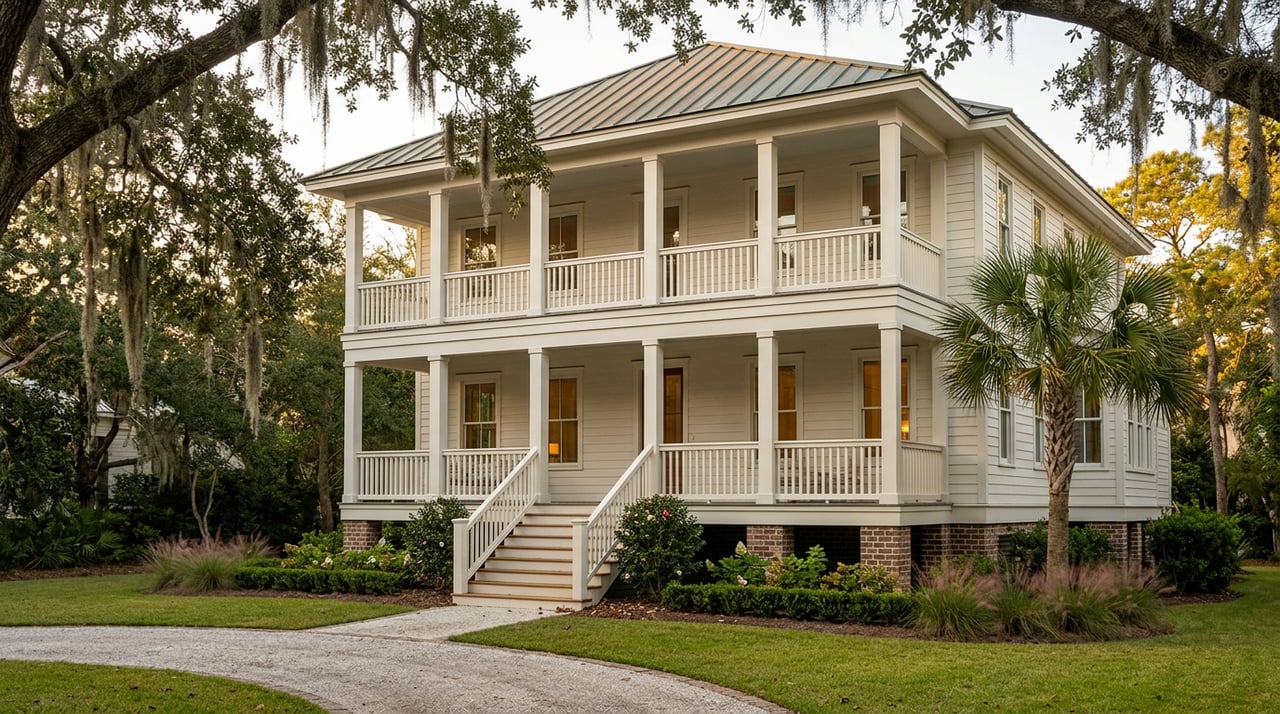
A buyer we'll call Mark had done his homework on Jekyll Island. He'd looked at the listings, compared square footage, checked flood zones. He was two weeks from closing when his attorney explained something that hadn't come up in any of the online research: the Jekyll Island Authority explains that he wasn't buying land. He was buying a house that sits on land the State of Georgia still owns, under a lease that runs out sometime between 2049 and 2088 depending on the parcel.
That conversation happens more often than it should, because "Golden Isles real estate" gets marketed and searched as one thing. It isn't. St. Simons Island, Sea Island, Jekyll Island, and Little St. Simons Island sit inside the same barrier island chain, share the same welcome sign, and operate as four almost entirely different products. A median price from one tells you close to nothing about what you'd actually be signing up for on another.
On St. Simons, a median price is a market signal. On Jekyll, it's a lease term with a price attached. On Sea Island, it's a number that seven sales in a month can swing by a million dollars. On Little St. Simons, there is no price, because there's nothing to buy.
Here's how the four break down, and why the difference matters more than the sticker price does.
The four islands, side by side
| Island | Ownership model | Recent price signal | Pace of the market |
|---|---|---|---|
| St. Simons Island | Standard fee simple | Median sale price around $664K over the three months ending May 2026 | Sells in about 45 days on average; a "somewhat competitive" market |
| Sea Island | Fee simple, ultra-luxury tier | Median sale price around $7.0M over the three months ending May 2026, up 20.6% year over year | Averaging 107 days on market; only 7 homes sold in May 2026 |
| Jekyll Island | State-owned land, leasehold structure | Not comparable on a standard price basis | More than 600 private residences total |
| Little St. Simons Island | Golden Isles describes it as a privately owned resort | Not applicable | An 11,000-acre private resort, reachable only by boat |
That table is the whole argument in miniature. Now the texture behind each row.
St. Simons Island: the one that behaves like a market
Of the four, St. Simons is the one that functions the way most buyers expect a housing market to function. Homes trade in fee simple, meaning you own the land and the structure outright, the way you would in most of coastal Georgia. Over the three months ending May 2026, the median sale price sat around $664K, with homes selling in about 45 days on average and the market scoring as "somewhat competitive." In May 2026 alone, 148 homes sold, down slightly from 162 the year before.
That's a real market with real comparables. It's also the island where price alone tells you the most, because the ownership structure is the one your lender, your title company, and your closing attorney already know how to handle.
Sea Island: same chain, different physics
Drive fifteen minutes and the rules of the market change, even though the ownership structure doesn't. Sea Island homes are still fee simple. What's different is scale and depth. Over the three months ending May 2026, the median sale price on Sea Island ran around $7.0M, up 20.6% from the same period the year before. Homes there average 107 days on the market, roughly double the wait on St. Simons, and only 7 homes sold in May 2026.
That last number is the one worth sitting with. When a market only produces single-digit monthly sales, one unusually large estate or one distressed sale can move the median by hundreds of thousands of dollars without reflecting anything about broader demand. A 20% year-over-year jump on Sea Island isn't necessarily a signal that values are climbing across the island. It might just be what happens when a handful of high-end transactions land in the same quarter. Anyone using Sea Island's median as evidence of a trend should ask how many sales are actually behind that number before drawing a conclusion.
Jekyll Island: you're not buying the dirt
Jekyll is where the comparison breaks down entirely, and where a buyer like Mark can get furthest from what they assumed they were signing up for.
The island is a Georgia state park. The Jekyll Island Authority confirms that all land on Jekyll is owned by the State of Georgia, and that more than 600 private residences on the island sit on leased parcels rather than owned ones. When you buy on Jekyll, you own the house and any improvements to it, and you hold a long-term lease on the ground beneath it. Current residential leases run out anywhere from 2049 to 2088 depending on the property, which means the first question a serious buyer should ask isn't the list price. It's how many years are left on that specific lease, because a property with 22 years remaining and a property with 60 years remaining are not the same purchase even if they're priced the same.
The differences don't stop at the ground lease. If you plan to rent the home, short or long term, you need a rental license from the Jekyll Island Authority. On top of licensing, short-term rentals on Jekyll carry a percentage rent owed back to the Authority, commonly cited at 3% of gross rental revenue.
The practical result shows up in something as basic as a home-value estimate. Because Jekyll properties sit on land leases rather than fee-simple parcels, standard automated valuation tools don't produce estimates for homes there the way they do elsewhere. There's no shortcut number to check. Every Jekyll purchase has to be evaluated on its own lease term, its own carrying costs, and its own rental rules, which is exactly the kind of detail that gets skipped when someone is comparing four islands by scrolling through listing photos.
Little St. Simons Island: not actually for sale
The fourth island rounds out the picture by removing the question of price altogether. Little St. Simons Island is an 11,000-acre privately owned barrier island resort, reachable only by boat from the Hampton River Marina on St. Simons Island's north end. There is no private residential ownership on Little St. Simons. It functions as a guest destination, not a real estate market, which makes it the clearest example of how loosely the word "island" gets used when people talk about the Golden Isles as a single place to buy.
What this means before you write an offer
If you're comparing these four islands as options for a second home or a move to the coast, the sticker price is the least useful number you'll encounter. St. Simons will behave like the housing markets you already know. Sea Island will reward patience and punish anyone reading too much into a single quarter's median. Jekyll will ask you to think in lease years and rental licensing before you think in square footage. Little St. Simons will remind you that not every barrier island in a marketing brochure is one you can actually purchase a piece of.
None of that means one island is better than another. It means the four aren't interchangeable, and a plan that works on one won't automatically transfer to the next one over. If you're weighing a purchase against these differences, or you're trying to figure out what a Savannah-area or coastal Georgia home you already own might be worth as you consider a move toward the coast, our team at Vaden Realty Group spends real time in these ownership structures and can help you sort through them before you're under contract, not after.
FAQ
Can you get a regular mortgage on Jekyll Island? Financing is available, but it varies by lender and loan product because you're financing a leasehold interest rather than fee-simple land. It's worth confirming remaining lease-term requirements and documentation with a lender early, before you get attached to a specific property.
What happens when a Jekyll Island lease runs out? Lease terms control what happens at expiration, and Jekyll Island Authority materials note that improvements on the land may vest with the Authority once the lease ends. That's part of why the remaining years on a specific lease matter as much as the price on the listing.
Why did Sea Island's median price jump 20% in a year if nothing else changed? With only a handful of sales each month, Sea Island's median is sensitive to which specific homes happened to sell. A single high-end estate closing in a slow month can shift the median without reflecting a broader change in values across the island.
Can you buy property on Little St. Simons Island? No. It operates as a privately owned resort with no private residential ownership, so it isn't part of the buying conversation the way the other three islands are.
This article is general information, not legal, tax or financial advice. Consult a qualified professional about your situation.