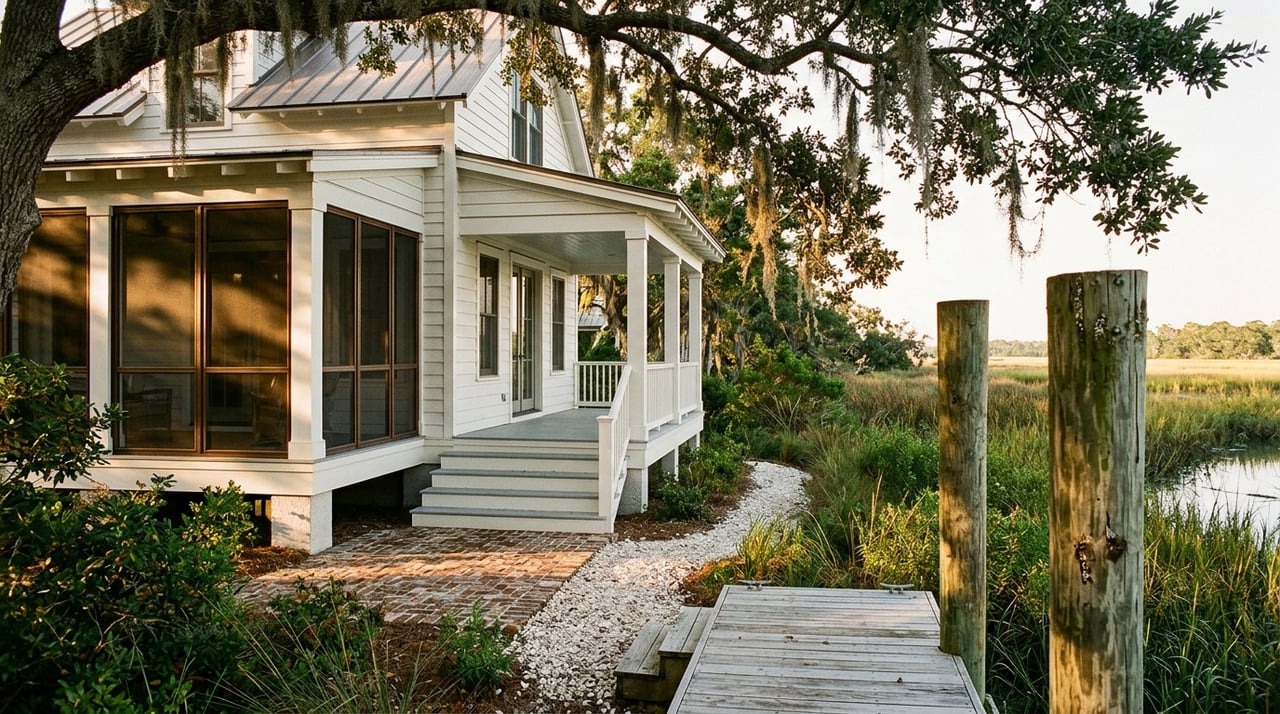
Dreaming about a waterfront home on Isle of Hope? You are not alone, and for good reason. Buying along the water here can offer a rare mix of river views, historic character, and coastal lifestyle, but it also comes with details that matter more than they would in a typical neighborhood purchase. This guide will help you understand what sets Isle of Hope apart, what drives pricing, and what to check before you buy. Let’s dive in.
Why Isle of Hope Stands Out
Isle of Hope is a historic coastal-riverside community on the Skidaway River, about eight miles from downtown Savannah. The area developed over roughly 100 years beginning in the early nineteenth century, and the Isle of Hope Historic District is listed on the National Register of Historic Places. That history still shapes what you see and what you can buy today.
One of the biggest draws is the setting. Isle of Hope is known for waterfront streetscapes, boardwalk access, docked boats, and homes that range from simple cottages to large estate-style properties. If you are drawn to neighborhoods with local character, this is one of the clearest examples in the Savannah area.
The housing mix is also broader than many buyers expect. You will find small cottages, vernacular houses, Craftsman and bungalow styles, Victorian Eclectic and Neoclassical homes, plus some antebellum properties. For you as a buyer, that means a waterfront search here is not only about the view. It is also about condition, age, renovation expectations, and how much historic character you want to take on.
Know the Three Main Property Types
Not every home near the water offers the same experience. On Isle of Hope, it helps to think in terms of three distinct property types.
True waterfront homes
These homes have direct frontage on the water and may include private dock access. In many cases, this is the most limited and most expensive category because it combines view, access, and lot value in one package.
Marsh- or river-view homes
These homes may have strong water views without direct frontage. You may still get much of the visual appeal of coastal living, but without the same level of dock ownership or shoreline responsibility.
Inland homes near the water
Some homes are close to Bluff Drive or other waterfront areas but do not sit directly on the water. These can still offer the neighborhood feel buyers want, while often bringing a different price point and fewer waterfront maintenance issues.
Understanding that difference can save you time. Two homes may both be marketed as part of Isle of Hope’s waterfront lifestyle, but their ownership costs, upkeep, and long-term value drivers may be very different.
What the Market Is Telling You
Current market data for Isle of Hope shows a small inventory and a wide price range. Zillow reports an average home value of $590,155 as of April 30, 2026. Redfin reports a median sale price of $688,145 with four homes sold in April 2026 and an average market time of 61 days, while Realtor.com shows 13 homes for sale with a median list price of $749,000 and a median of 43 days on market.
These numbers are helpful, but they are not apples-to-apples. One source tracks home values, another tracks sold prices, and another tracks asking prices. The main takeaway is that Isle of Hope is a tight market, and buyers need to look closely at the specific property rather than rely on one neighborhood-wide number.
Waterfront supply is especially limited. Realtor.com currently shows just one waterfront home for sale in Isle of Hope, listed at $769,000 for a 3-bedroom, 2.5-bath home on Central Avenue with 1,976 square feet on a 0.87-acre lot. Redfin’s view-based search shows only four homes with a view and a median listing price of $757,000.
Recent sales also show how much direct water access can influence value. A sale at 7521 La Roche Avenue closed for $1,012,073 and included waterfront acreage, a private dock, floating dock, and boat hoist. Another nearby waterfront property at 7523 La Roche Avenue last sold for $995,000, while a June 2025 sale at 138 Cardinal Road was reported at $2,255,000 and described as a water-at-all-tides property.
At the same time, recent sales in Isle of Hope have also occurred at $300,000, $463,900, and $552,000. That spread shows an important truth about this market: the neighborhood name matters, but parcel details matter more. Water access, view quality, lot size, dock setup, and shoreline condition can shift value in a major way.
What Drives Waterfront Pricing
If you are comparing homes on Isle of Hope, start with the lot before you focus on the finishes. In waterfront real estate, the site often carries as much weight as the house itself.
Here are some of the biggest pricing factors to evaluate:
- Direct water frontage versus water view only
- Presence of a private dock or floating dock
- Boat access and usable water conditions
- Lot size and privacy
- Shoreline condition and any stabilization work
- Historic character and renovation needs
- Flood zone and elevation requirements
A beautifully updated home without direct access may still compete with a less updated home that has a better lot. That is why local guidance matters so much in a place like Isle of Hope. You are not just comparing square footage. You are comparing a bundle of lifestyle, maintenance, access, and future project potential.
Flood Zones and Insurance Matter Early
One of the most important parts of buying a waterfront home is understanding flood exposure before you get deep into due diligence. In coastal areas, this is not a small side issue. It can affect financing, insurance costs, renovation plans, and your long-term comfort with the property.
Chatham County says flood maps are used to set minimum building requirements for coastal areas and floodplains and to determine flood insurance requirements. The county also notes that unincorporated Chatham County participates in the National Flood Insurance Program and the Community Rating System, which currently provides a 25% discount on flood insurance premiums in that jurisdiction.
It also helps to understand that homeowner’s insurance and flood insurance are not the same thing. Standard homeowner’s insurance does not cover flood damage. For buildings located in Special Flood Hazard Areas, federally regulated, supervised, or agency lenders require flood insurance in participating communities.
For you as a buyer, the practical move is to get both homeowner’s and flood insurance quotes early. That gives you a more realistic monthly cost picture before you finalize your decision.
Renovation Rules Can Affect Your Plans
If you are buying a waterfront home with plans to renovate, expand, or elevate, local floodplain rules deserve close attention. A property that looks like a cosmetic project at first glance can turn into a more complex planning exercise once flood requirements enter the picture.
Chatham County requires Floodplain Development Review for all work in A, AE, or VE zones before a building permit is issued. The county also says new homes and substantial improvements in unincorporated Chatham County must be elevated at least three feet above base flood elevation. Electrical components, plumbing fixtures, and ductwork must be elevated as well.
That means your future addition, major remodel, or rebuilding plan may involve more than design choices. It may affect engineering, budget, schedule, and feasibility. If you are considering a renovation-minded purchase, this is where experienced local advice can add real value.
Check Docks and Shoreline Work Carefully
Private dock access can be a major benefit on Isle of Hope, but it is also one of the areas where buyers need to verify details carefully. You do not want to assume an existing dock, bulkhead, or shoreline feature is simple to repair, replace, or modify.
Georgia DNR’s Coastal Resources Division says private recreational docks use the Individual Permit process. Shared docks serving more than four waterfront residents, or any non-waterfront residents, must use the Coastal Marshlands Protection Act application process.
The same agency says this process can apply to marinas, community docks, bridges, dredging, bank stabilizations, and other construction in marsh and tidal-water jurisdictions. DNR also notes that erosion can occur along tidal river and creek banks, and stabilization solutions may include bulkheads, seawalls, rip-rap, or living shorelines.
Projects below the high-tide line or within marsh jurisdiction require written approval from both the Georgia Department of Natural Resources and the Army Corps of Engineers. For you, that means any waterfront improvement should be reviewed as both a property feature and a future permitting responsibility.
A Smart Due Diligence Checklist
Before you move forward on a waterfront purchase in Isle of Hope, it helps to slow down and confirm the basics. The right checklist can protect you from expensive surprises later.
Key items to verify
- Confirm the parcel’s flood zone
- Ask whether an elevation certificate exists
- Get separate homeowner’s and flood insurance quotes early
- Verify the status and legality of any dock
- Review any bulkhead or bank stabilization features
- Ask about past shoreline repairs or erosion concerns
- Consider whether your renovation plans could trigger floodplain review
This kind of due diligence is especially important in a market where inventory is limited. When a unique property hits the market, it can be tempting to move fast. You still want to make sure the lot, structures, and waterfront features all line up with your goals.
Isle of Hope Versus Dutch Island
Some buyers looking in this area also compare Isle of Hope with Dutch Island. That comparison can be useful because the two communities offer different versions of coastal living.
Dutch Island is a nearby waterfront neighborhood along the Herb River with access to the Intracoastal Waterway. Its community information says it includes about 450 to 500 homes on more than 500 acres, a 450-foot dock and boat launch, 24-hour gated security, and annual HOA dues of $1,400. It also has an architectural review process for exterior changes.
For you as a buyer, the contrast is fairly clear. Dutch Island represents a more managed, amenity-driven waterfront setting with association structure built in. Isle of Hope tends to be more parcel-specific, more historically varied, and more dependent on individual lot conditions, access rights, and maintenance realities.
Neither approach is automatically better. It depends on whether you want more uniformity and shared amenities, or more historic character and a lot-by-lot decision process.
How to Buy With Confidence
Buying waterfront on Isle of Hope is part lifestyle decision and part technical decision. The charm is real, but so are the details. The buyers who do best here usually balance emotional connection with careful review of flood exposure, dock status, shoreline conditions, and renovation potential.
That is also why local market knowledge matters. In a neighborhood where one property may be a simple view home and another may include private dock infrastructure, acreage, and complex permit considerations, broad averages only tell part of the story. You need guidance that looks at the whole picture.
If you are exploring waterfront homes on Isle of Hope, the right support can help you compare options clearly, understand tradeoffs, and move forward with confidence. When you are ready for tailored guidance on buying, renovating, or evaluating a unique coastal property, connect with Vaden Realty Group.
FAQs
What makes Isle of Hope waterfront homes different from other Savannah-area homes?
- Isle of Hope offers a mix of historic housing styles, limited waterfront inventory, and parcel-specific factors like docks, shoreline conditions, and floodplain considerations.
What should buyers check first when buying a waterfront home on Isle of Hope?
- Buyers should confirm the flood zone, ask for an elevation certificate if available, and get both homeowner’s and flood insurance quotes early.
What affects the price of a waterfront home on Isle of Hope?
- The biggest factors include direct water access, dock infrastructure, lot size, view quality, shoreline condition, and the home’s renovation needs.
What should buyers know about docks on Isle of Hope properties?
- Buyers should verify whether a dock is permitted and legal, because dock work and shoreline projects may require approval through Georgia DNR processes.
How does Isle of Hope compare with Dutch Island for waterfront buyers?
- Isle of Hope usually offers more historic character and lot-by-lot variation, while Dutch Island offers a more managed setting with HOA structure, shared amenities, and annual dues.
Can renovation plans change the cost of owning a waterfront home on Isle of Hope?
- Yes. In flood hazard zones, renovation or addition plans may trigger floodplain review and elevation requirements that affect budget and timing.